Hidden moisture behind walls can cause serious property damage long before water stains, peeling paint, or musty odors appear. A leaking pipe, damaged roof, faulty window seal, or condensation problem may allow water to collect inside a wall without revealing its exact location.
By the time the moisture becomes visible, it may have already affected drywall, insulation, wood framing, flooring, or electrical components. Thermal imaging provides a fast, noninvasive way to identify temperature patterns that could indicate hidden moisture.
ACS Underground Solutions provides professional infrared thermal imaging services throughout Connecticut, New York, New Jersey, Massachusetts, and Rhode Island. Using advanced thermal imaging equipment, ACS helps property owners, contractors, engineers, municipalities, and facility managers investigate suspected moisture problems without immediately cutting into walls or ceilings.
What Is Thermal Imaging?
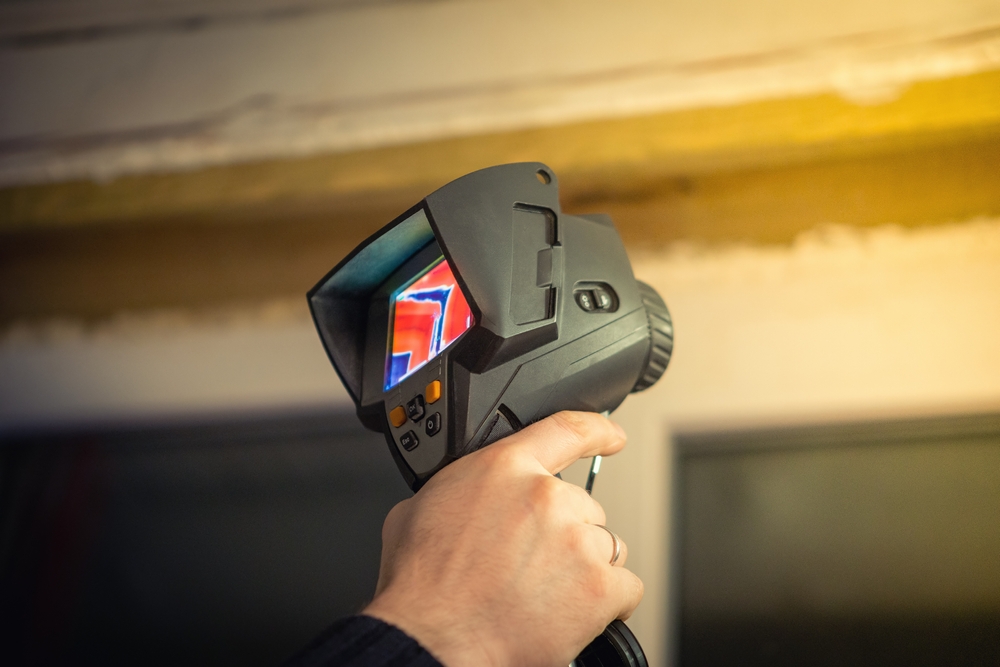
Thermal imaging is an inspection method that measures infrared energy emitted from the surface of an object. A thermal imaging camera converts that information into a visual image showing differences in surface temperature.
Depending on the camera settings, warmer areas may appear red, orange, yellow, or white. Cooler areas may appear blue, purple, or black.
A thermal camera does not see through walls like an X-ray. Instead, it identifies temperature differences on the wall’s surface. Those differences can provide valuable clues about conditions hidden behind drywall, plaster, ceilings, flooring, and other building materials.
When moisture is present behind a wall, it can change the way the affected materials absorb, retain, and release heat. A trained technician can analyze these temperature patterns to identify areas that may require additional moisture testing.
How Does Moisture Affect Wall Temperature?
Wet and dry building materials react differently to changes in temperature. Moisture can cause drywall, insulation, wood, masonry, and concrete to warm or cool at a different rate from the surrounding dry materials.
Evaporation also creates a cooling effect. As moisture evaporates from an affected material, it removes heat. This may cause the wet area to appear cooler on a thermal image.
The exact thermal pattern depends on several factors, including:
- The amount of moisture present
- The source of the water
- The type of building material
- Indoor and outdoor temperatures
- Humidity levels
- Air movement
- Heating and cooling systems
- The location of insulation and framing
- How long the moisture has been present
- Whether the leak is active or intermittent
A cool area on a wall does not always mean that moisture is present. Missing insulation, HVAC airflow, plumbing lines, metal framing, and air leaks can create similar patterns. Professional interpretation and additional moisture testing are often necessary.
How Thermal Imaging Finds Hidden Moisture
During a thermal imaging inspection, a technician scans accessible walls, ceilings, floors, and other building surfaces. The camera records small temperature differences that may not be visible or noticeable by touch.
The technician looks for unusual patterns rather than simply locating the coldest area. Moisture-related patterns may appear irregular, extend outward from a source, or follow the path of gravity.
For example, a leaking pipe may produce a narrow pattern along the plumbing route. A roof leak could create an uneven cool area across a ceiling. Water entering around a window may appear along the frame and extend downward into the wall.
Once a suspicious area is identified, it may be tested with a moisture meter. This helps determine whether the material contains elevated moisture or whether the temperature difference has another cause.
A typical inspection may include:
- Reviewing the history of the suspected moisture problem
- Evaluating indoor and outdoor conditions
- Visually inspecting the affected area
- Scanning surfaces with a thermal imaging camera
- Identifying unusual temperature patterns
- Comparing suspicious areas with surrounding materials
- Testing selected areas with a moisture meter
- Documenting the findings with thermal and standard photographs
- Recommending additional investigation or repairs
This process helps narrow down the location of a potential problem and may reduce unnecessary demolition.
Common Causes of Hidden Moisture Behind Walls
Moisture can enter a wall cavity from several sources. Identifying the cause is essential because the problem will continue until the source is corrected.
Leaking Plumbing Pipes
Water supply lines, drainpipes, fittings, and plumbing connections can leak inside walls. A small pinhole leak may release water slowly and remain unnoticed for weeks or months.
Some plumbing leaks occur continuously. Others only happen when a shower, sink, toilet, washing machine, or dishwasher is being used. Thermal imaging can help identify suspicious areas near the plumbing route.
Roof Leaks
Water from a damaged roof does not always create a stain directly below the opening. It can travel along roof decking, rafters, pipes, insulation, and structural components before reaching a ceiling or wall.
Thermal imaging can help identify the general extent of moisture and show where the water may have traveled.
Window and Door Leaks
Damaged flashing, deteriorated caulking, installation problems, and blocked drainage openings can allow rainwater to enter around windows and doors.
The moisture may collect beneath a window or travel into nearby framing. A thermal inspection can help locate temperature differences around the opening.
Foundation and Basement Moisture
Foundation cracks, groundwater pressure, poor exterior drainage, and defective waterproofing can introduce moisture into basements and lower-level walls.
Thermal imaging may reveal irregular or cooler areas along the foundation. Additional moisture testing may be needed because masonry and concrete naturally respond to temperature changes.
HVAC Condensation
Cold ductwork, refrigerant lines, air-conditioning equipment, and condensate drains can create moisture problems. Humid air may condense on a cold surface, while a damaged or clogged condensate line may release water into a wall or ceiling.
Infrared imaging can help identify temperature patterns associated with condensation, wet insulation, or leaking HVAC components.
Exterior Water Intrusion
Cracked siding, failed masonry joints, damaged stucco, missing flashing, and deteriorated sealants may allow rainwater to enter an exterior wall.
Wind-driven rain can force water through small openings that are difficult to find through a standard visual inspection.
Condensation Inside Wall Cavities
Condensation can form when warm, humid air contacts a cold surface inside a wall. This problem may result from inadequate insulation, air leakage, improperly installed vapor control materials, or significant indoor and outdoor temperature differences.
Thermal imaging can help identify the cold surfaces and insulation problems that contribute to condensation.
Warning Signs of Hidden Moisture
Hidden moisture may not be immediately visible, but there are often warning signs that indicate a problem.
These signs may include:
- Musty or damp odors
- Discolored drywall or plaster
- Bubbling or peeling paint
- Loose wallpaper
- Soft wall surfaces
- Warped baseboards or trim
- Swollen wood materials
- Recurring mold or mildew
- Unexplained increases in water bills
- Dripping or running water sounds
- Cold or damp areas on walls
- Stains near windows or ceilings
- Damaged flooring near a wall
- Increased indoor humidity
These symptoms can have several causes. A professional inspection can help determine whether hidden moisture is responsible.
Benefits of Thermal Imaging for Moisture Detection
Noninvasive Inspection
Thermal imaging does not require drilling holes, removing drywall, lifting flooring, or opening ceilings during the initial inspection. The camera gathers temperature information from accessible surfaces.
Faster Problem Detection
A thermal camera can scan large walls, ceilings, and rooms quickly. This allows the technician to compare multiple surfaces and identify patterns that may not be visible during a standard inspection.
Less Unnecessary Damage
Without thermal imaging, locating a hidden leak may require opening several sections of a wall. Thermal data can narrow the search area and help reduce exploratory demolition.
Better Documentation
Thermal images provide visual documentation of surface temperature differences. They can be combined with regular photographs and moisture readings to help property owners and contractors understand the findings.
Improved Repair Planning
Identifying the suspected moisture location helps contractors determine where to investigate and which materials may be affected. This information can make the repair process more efficient.
Can Thermal Imaging Confirm Moisture?
Thermal imaging identifies surface temperature differences. It does not directly detect water or measure moisture content.
An unusual thermal pattern may be caused by moisture, but it could also result from:
- Missing or compressed insulation
- Air leakage
- Heating or cooling ducts
- Electrical components
- Plumbing lines
- Metal framing
- Direct sunlight
- Changes in wall thickness
- Different building materials
- Furniture blocking airflow
For this reason, thermal imaging is commonly used as a diagnostic screening tool. Suspicious areas may be tested with a pin-type or pinless moisture meter.
In some cases, a small inspection opening, plumbing test, roof evaluation, borescope inspection, or building envelope assessment may be recommended. Combining thermal imaging with other testing methods provides more reliable information.
Why Professional Interpretation Matters
Capturing a thermal image is relatively simple, but interpreting it correctly requires experience. A trained technician must understand heat transfer, building construction, environmental conditions, and common causes of unusual temperature patterns.
During the inspection, the technician may consider:
- Indoor and outdoor temperatures
- Humidity levels
- HVAC operation
- Direct sunlight
- Air movement
- Plumbing and mechanical systems
- Wall construction
- Insulation placement
- Recent weather conditions
- The history of the suspected leak
Incorrectly interpreting a thermal image could lead to unnecessary demolition or cause the actual moisture source to be overlooked. Professional evaluation helps property owners receive practical information based on the complete conditions.
Thermal Imaging for Commercial Properties
Hidden moisture can be especially expensive in commercial, municipal, institutional, and industrial buildings. These facilities often contain extensive plumbing, flat roofing systems, mechanical equipment, and complicated wall assemblies.
Thermal imaging can be used in:
- Office buildings
- Apartment and condominium properties
- Retail centers
- Warehouses
- Manufacturing facilities
- Schools and universities
- Municipal and government buildings
- Hospitals and healthcare facilities
- Hotels and restaurants
- Transportation facilities
- Historic properties
- Construction sites
Facility managers can use thermal imaging to investigate a suspected leak or as part of a preventive maintenance program. Finding moisture early may help limit building damage and operational disruptions.
What Happens After Moisture Is Found?
Locating moisture is only the first step. The source must be identified and corrected before damaged materials are repaired.
The next steps may include:
- Confirming the moisture with an appropriate meter or test
- Identifying whether the source is plumbing, roofing, drainage, condensation, or exterior water intrusion
- Stopping the leak or moisture source
- Evaluating the extent of the damage
- Removing materials that cannot be restored
- Drying the remaining structure
- Addressing mold growth when necessary
- Repairing walls, ceilings, flooring, or insulation
- Correcting the condition that allowed moisture to enter
- Conducting a follow-up inspection
Painting over a water stain will not solve the underlying problem. If moisture remains inside the wall, the damage may continue and spread.
Why Hidden Moisture Should Not Be Ignored
Even a small leak can become a serious and expensive problem. Moisture can damage drywall, reduce the effectiveness of insulation, stain finishes, corrode metal components, and contribute to wood deterioration.
Persistent dampness can also create conditions that support mold growth. Correcting the water source is essential for controlling moisture-related problems and protecting indoor areas.
Delaying an inspection may allow water to spread into adjoining walls, ceilings, floors, or occupied spaces. Early detection can reduce damage, limit repair costs, and provide more options for correcting the problem.
When Should You Schedule Thermal Imaging?
Consider scheduling a professional thermal imaging inspection if:
- You notice an unexplained water stain
- A wall or ceiling feels damp or unusually cold
- You smell a persistent musty odor
- Paint or wallpaper begins peeling
- Your water bill increases unexpectedly
- A plumbing leak is suspected but cannot be found
- Moisture returns after a previous repair
- A roof leak appears in an unexpected location
- Mold repeatedly develops in the same area
- A building has experienced flooding or storm damage
- You are planning a renovation
- You are purchasing a residential or commercial property
The timing and environmental conditions can affect what a thermal camera detects. A professional can determine the best approach for investigating your particular concern.
Why Choose ACS Underground Solutions?
ACS Underground Solutions provides professional thermal imaging and subsurface inspection services throughout Connecticut, New York, New Jersey, Massachusetts, and Rhode Island.
ACS works with contractors, engineering firms, municipalities, universities, government facilities, commercial property owners, and private property owners.
Available services include:
- Infrared thermal imaging
- Leak detection
- Underground utility locating with ground-penetrating radar
- Concrete imaging and scanning
- Underground storage tank locating
- Video pipe inspections
Whether you are dealing with possible moisture behind a wall, an underground water leak, an unidentified utility, or a buried storage tank, ACS Underground Solutions can provide the diagnostic support needed to investigate the problem.
Frequently Asked Questions
1. Can a thermal imaging camera see moisture through walls?
A thermal camera does not see through walls or directly photograph water. It measures surface temperature differences. Moisture behind a wall may change the temperature of the visible surface, creating a pattern the camera can detect.
2. How accurate is thermal imaging for finding hidden moisture?
Thermal imaging can be highly effective when wet materials have a measurable temperature difference from surrounding dry materials. Results depend on environmental conditions, building materials, the amount of moisture, and the technician’s experience. Moisture meters may be used to confirm the findings.
3. Can thermal imaging locate a plumbing leak behind drywall?
Thermal imaging may help identify the general location of a hidden plumbing leak. Acoustic leak detection, moisture readings, pressure testing, or a small inspection opening may also be needed to pinpoint the exact source.
4. Do walls need to be opened during the inspection?
Thermal imaging itself is noninvasive and does not require the wall to be opened. If a suspicious area is detected, additional testing or a small opening may be recommended to confirm the source and determine the extent of the damage.
5. Can thermal imaging detect mold behind a wall?
Thermal imaging cannot directly detect mold. It may identify moisture patterns or temperature conditions that could support mold growth. A separate mold inspection or appropriate testing may be needed.
Contact ACS Underground Solutions
Do not allow a hidden moisture problem to develop into major property damage. Contact ACS Underground Solutions to discuss professional infrared thermal imaging, leak detection, and underground inspection services.
ACS Underground Solutions
PO Box 448
Georgetown, CT 06829
Phone: 203-544-7190
Availability: Open 24/7
Website: www.acsunderground.com
Service Areas: Connecticut, New York, New Jersey, Massachusetts, and Rhode Island
Contact ACS Underground Solutions today to request an inspection or receive a quote.


